The Bridge Is Gone: Why Canadian Small Business Needs a Wartime Posture, Not a Waiting Room

Matthew Gubasta
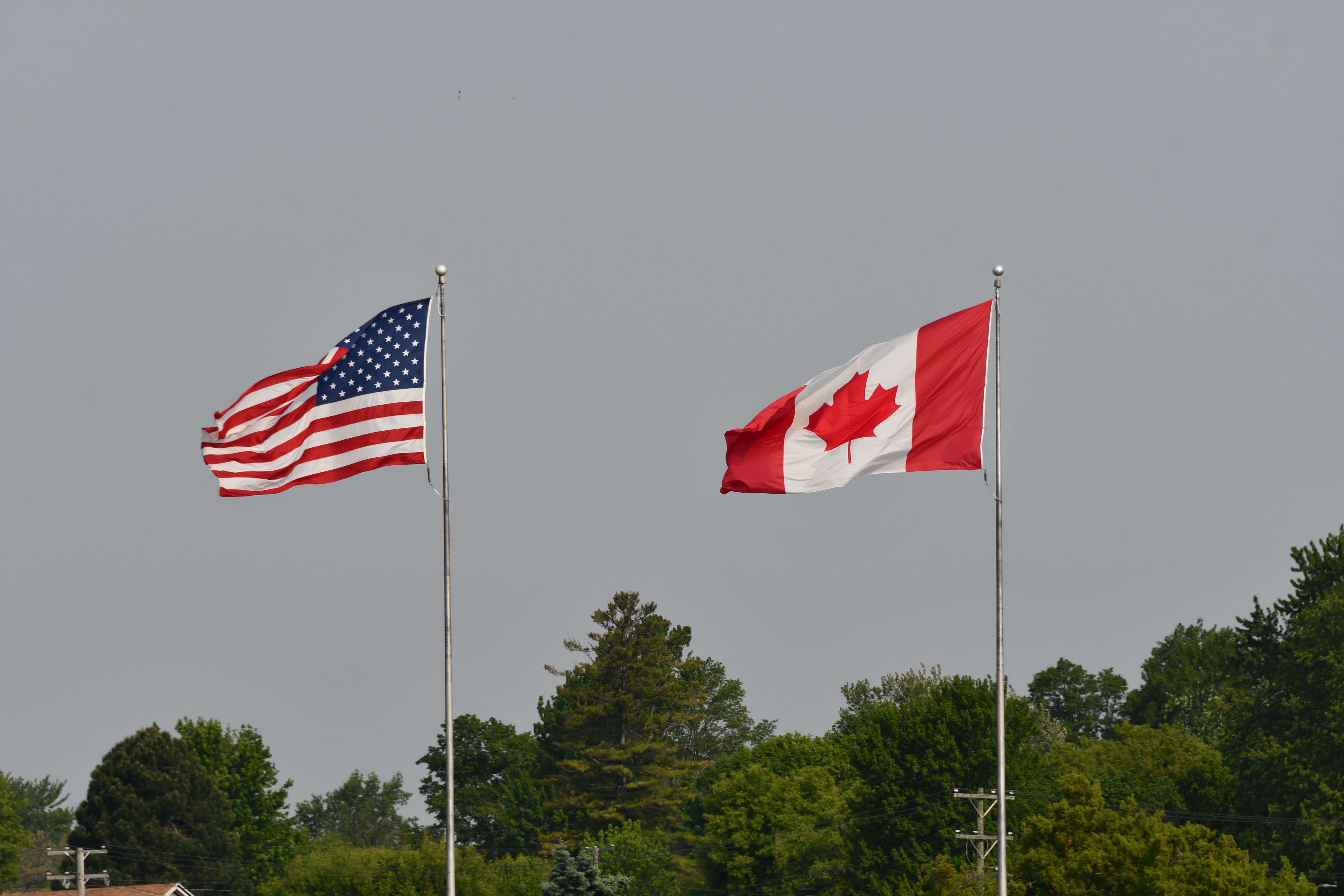
On Friday, August 22, 2026, trade talks collapsed.
If you run a Canadian business, you probably felt the uneasy shift before you finished reading the headlines. Prime Minister Carney called the U.S. terms “uneconomic, unfair” — terms that reportedly included demands to restrict Canada’s ability to forge new trade deals with other partners. The 50% tariff’s that the U.S. is hitting Canada with will impact roughly $20 billion of goods. Canada’s dollar-for-dollar retaliation lands September 8th. The Canadian Federation of Independent Business (CFIB) put it plainly: the impact on small businesses “will be immediate and significant.”
Here’s what I keep coming back to, though. It’s not just about the tariff rates. It’s the mental model that has vanished with the collapse of these talks.
For the past eighteen months, most businesses have been operating under the assumption that this is just a storm and that storms pass. Negotiate hard, absorb some pain, hold your team together, and eventually Canada will secure a deal that restores a growing relationship with the U.S. The assumption that if you work hard to get to the other side of this storm, your business can progress the way it always has.
We had a name for that assumption once. We called it the bridge.
Where the bridge model came from
Let’s rewind back to March 2020. The economy didn’t slow down — it stopped. Now, whatever you think of the details, the federal government’s response was built on a single concept: build a bridge to get to the other side.
This framework was the foundation of every major COVID relief program. The Canada Emergency Wage Subsidy (CEWS) covered up to 75% of business’s payroll — roughly $100 billion — so you could keep your team intact while you waited. The Canada Emergency Business Account (CEBA) put $60,000 of interest-free loans, a third of it forgivable, into the hands of nearly 900,000 businesses. Most of this was delivered straight into your bank account within weeks. For context, Canada has about 1,200,000 small-medium businesses so CEBA handing out interest free loans to 75% of them was never a long-term strategy. Additionally, rent subsidies flowed through the CRA at the same speed.
The support was fast, universal, and grant-heavy for a reason: everyone believed there was an “other side”. The old economy was intact under the ice and the government’s job was to keep businesses alive until the thaw. You didn’t have to pitch anyone, and you didn’t have to compete for funding. If you were a Canadian business, the money found you and kept you afloat. And broadly, it worked — because the premise was true. The pandemic ended. Customers came back. The other side of the bridge landed somewhere.
That experience taught Canadian business owners a lesson that has quietly shaped how we’ve responded to this trade war: in a crisis, hunker down and hibernate. Preserve cash. Wait for the deal. The other side is coming.
The problem is that this trade war broke every assumption that made the bridge model work.
This Trade War is a different kind of crisis
COVID was symmetric, blameless, and temporary. Every business in every province was hit at once, nobody caused it, and there was a predictable endpoint you could believe in.
This trade war is the opposite on all three counts. It’s asymmetric — steel, aluminum, machinery, wood products, food and beverage, and anyone exporting south of the border is getting crushed, while other firms feel almost nothing. It’s political, which means it can be extended, escalated, or reversed by a single announcement, and no forecast survives contact with it. And it is open-ended by design. When U.S. courts struck down one legal basis for the tariffs earlier this year, the White House simply reached for another one. There is no cure for this situation in the same way there was for COVID.
The numbers show exactly how deep it cuts. CFIB’s August survey of 1,833 business owners found that 40% of small exporters have products directly affected by the new tariffs. Of those, more than three-quarters expect revenue losses, and roughly a third expect revenues to fall by half or more. 78% percent of those surveyed believe the tariffs make their products flat-out uncompetitive in the U.S. market. In addition, over half of Canadian small firms import from the U.S., meaning our own retaliation cuts into the other side of the equation too.
Those figures are already staggering but the one that I am most interested in isn’t any of those. It’s this one: 78% of exporters describe themselves as in “wait-and-see” mode.
That’s the bridge model instinct. That’s 2020 muscle memory. As a business owner who supports and tracks hundreds of Canadian businesses, that stat scares me. Nearly four out of five affected businesses are standing at the foot of a bridge, waiting for construction to resume — a week after the crew walked off the job.
Read the support programs. They’re telling you something.
If you want to know what Ottawa really believes about where this is heading, don’t take the press conferences at face value. Read the design of the relief programs.
In 2020, the federal government offered grants for businesses to stay the same — wage subsidies to keep your team, rent support to keep your lease, forgivable loans to keep your lights on. Every dollar was a bet that your existing business, exactly as it was, deserved to be waiting on the other side.
Now look at 2026. The federal tariff response is built from a $5 billion Strategic Response Fund, a $1 billion BDC financing program aimed at manufacturers, and a $500 million Regional Tariff Response Initiative focused on “market diversification” and “competitiveness.” BDC’s flagship product for affected businesses is literally named “Pivot to Grow.”
Sit with that for a second. The 2020 program said: we’ll pay you to survive as you are. The 2026 program says: we’ll lend you money to become something else.
That’s not a bridge. That’s a loan to build a new boat instead — and the government is putting the risk of building the boat on your balance sheet instead of theirs. Whatever you think of that policy choice, it’s a statement: Ottawa is no longer designing relief programs around the assumption that the old status quo is coming back. Loans-not-grants, targeted-not-universal, application-not-automatic — every design choice implies a permanent restructuring, not a temporary storm.
Canada’s small and medium business community has a harder truth to face: this restructuring-era of support hasn’t even been reaching us. CFIB called the earlier rounds of tariff relief — roughly $25 billion— “shockingly unfair and ineffective” for small businesses. They go on to note that most of the loan programs delivered by regional development agencies specifically exclude small firms. However, big auto got carve-outs and steel got a dedicated $150 million envelope. Yet, why is it that, the small-lot manufacturer with 14 employees got an application portal and a maybe.
In 2020, the money found you. In 2026, you have to find the money — and qualify for it — and pay it back. This shift will slowly kill a lot of businesses and hurt the economy just as much as the tariffs themselves.
There’s one more asymmetry worth naming, because it explains why this moment feels heavier than what the raw tariff numbers suggest: a lot of Canadian small businesses are fighting this trade war with balance sheets still scarred from 2020. The CEBA loans that kept nearly 900,000 businesses alive didn’t vanish. Those that couldn’t repay by the forgiveness deadline refinanced and are still carrying that debt today, at commercial rates mind you, into a fight nobody signed up for. The pandemic playbook can’t simply be run again, and not only because Ottawa’s fiscal appetite has changed. The reserves it drew on — public money, private savings, and quite frankly the emotional endurance of businesses — have been heavily spent already. Both the federal government and business know it, even if neither admits it out loud.
The wartime posture
So, what do we do with all this information? How do we move forward? How do we navigate this storm? I think the answer starts with retiring the bridge model entirely and adopting the one more suitable model: a wartime posture.
I don’t mean that as chest-thumping battle cry. I mean it as a realistic and specific operating model because it differs from the pandemic playbook in three ways.
Wartime means acting without certainty. The 2020 playbook rewarded waiting, because the endpoint was real. This time, waiting is the riskiest strategy on the table. The businesses that started diversifying when the tariffs first hit in March 2025 are eighteen months ahead of the 78% still in a wait-and-see mode. Every quarter spent waiting for a deal that continues to not arrive is a quarter your rebuilt competitor gets for free. You don’t need certainty about where tariff rates land in 2027 to know that a revenue base concentrated in one foreign market — one that just demanded, as a condition of peace, the right to limit who we trade with — is a structural liability.
Wartime means building domestic capacity like it matters, because it does. The most underrated economic story in Canada right now is happening inside our own borders. The One Canadian Economy Act passed last year, and as of January 1st 2026 the Free Trade and Labour Mobility in Canada Act is in force — this is the most serious stride at dismantling interprovincial trade barriers in a generation. Economists have estimated for years that our own internal barriers create a much larger negative economic impact than tariffs ever have or could. Meanwhile the “Buy Canadian” wave — in federal procurement policy and, more importantly, in consumer behavior — is a genuine demand-side tailwind that no government program had to fund. A customer base that actively wants to replace U.S. suppliers is a wartime asset. For a lot of SMBs, the market you’ve never seriously sold to isn’t overseas. It’s three provinces over.
Wartime means selling to the world, not just the neighbourhood. Once you’ve looked three provinces over, look across the ocean. Here’s a fact that should be taped to the wall of every Canadian SMB: Canada is the only G7 country with a free trade agreement with every other G7 country. The Comprehensive Economic and Trade Agreement (CETA) gives Canadian goods preferential access to the European Union — 450 million consumers actively looking for reliable suppliers who aren’t American or Chinese. The Comprehensive and Progressive Agreement for Trans-Pacific Partnership (CPTPP) is the same framework across Japan, Australia, and the fastest-growing markets of the Asia-Pacific. All told, our trade agreements open doors to more than 50 countries. We spent decades negotiating for those doors to open and then decided not to walk through them, because the customer down the street was easy. That subsidy of convenience is gone — and it’s worth saying plainly: the EU didn’t put a 50% tariff on us. Neither did Japan, the U.K., or South Korea. For an exporter staring at the U.S. wall, “abroad” is no longer a someday diversification topic. It’s the growth market hiding in plain sight, with the tariff-free access already signed.
Wartime means treating capital as strategy, not rescue. This might be the biggest mindset shift of all. In 2020, funding was relief — businesses gorged on what was offered and used it to hibernate through the winter. In 2026, funding is repositioning fuel, and it’s scattered across a genuinely confusing landscape: the Strategic Response Fund, BDC’s programs, the regional agencies, EDC facilities, provincial packages, work-sharing, remission requests, plus the whole ordinary universe of grants, banking products, and private credit that is growing in almost every sector. The support is narrower and harder to access than it was previously — CFIB is right about that, and we should keep pushing Ottawa for relief programs that small firms can actually reach, starting with tax relief rather than loan programs with exclusionary criteria. But narrower doesn’t mean nonexistent. It means the advantage goes to the businesses that treat finding and securing capital as a core operating function, with the same seriousness they bring to securing/generating/their sales. It also means positioning a business’s story through the lens of opportunity. Businesses need to show how they’re reaching for the customer base that they never had previously. But make sure to position it as opportunity and not fall back.
The venture capital community is famous for backing pivots. It’s time to remind them of that history and the opportunity that comes with it.
None of this requires a moonshot. In practice, a wartime posture for a 15-person business looks unglamorous: map exactly which of your revenues and inputs touch the U.S. border, in dollars, this week. Price out one non-U.S. supplier for your most exposed input, even if you don’t switch yet. Pick one province, or one CPTPP or EU market, and put a real number on what it would take to win your first customer there. And inventory every funding program — federal, provincial, regional — you could plausibly qualify for, before you need it, because application-based support goes to the prepared. Do the same thing for investors in your space. That’s a month of focused work. The 78% in wait-and-see mode haven’t started it. You can have the advantage.
The new normal is the one we build
Here’s the part I find strangely hopeful.
The demand that reportedly helped kill the talks — that Canada limit its ability to strike new trade deals — is the clearest evidence of what our leverage is. Here’s a hint: you don’t try to negotiate away someone’s alternatives unless their alternatives scare you.
Canada’s alternatives should scare them. A country of forty million people with energy, food, critical minerals, talent, and — finally — a political consensus for knocking down its own internal walls does not need to define economic success as restoring 2024. The old status quo, where three-quarters of our exports flowed to a single customer who has now twice walked away from the table, wasn’t a golden age. It was a concentration risk we’d all agreed to stop noticing.
The pandemic asked Canadian business owners to survive. Today’s moment asks us to rebuild deliberately at wartime speed, towards an economy that grows on its own foundations and through new relationships. No more waiting for an old model to be restored. The trust is gone. The bridge crumbled. I’ve said it before, and it is a hard truth, and for exporters facing a 50% tariff, it’s a brutal one. But the other side of a bridge was only ever going to be the place we’d already been. One that didn’t favor SMBs. It’s time we built a boat and set sail to explore new lands.
Let me say the quiet part out loud: August 22nd might end up being the best worst thing that ever happened to Canadian business. Not because tariffs are anything but a wrecking ball — they are — but because our dependency was killing us slowly, politely, and with our full cooperation. It took Washington demanding, in writing, the right to limit who else we could trade with for us to finally see our alternatives the way they do: as leverage worth fearing. We should take the compliment. Then we should act on it.
Five years from now, there will be two kinds of Canadian businesses: the ones still standing at the foot of a bridge that is never being rebuilt, and the ones that used this war to become something a branch-plant economy never allowed them to be. The tariffs picked the fight. We get to pick the ending. Stop waiting for the skies to clear. Build the boat.
At HighPath, we spend every day helping Canadian businesses find and secure the funding they actually qualify for — investment, grants, banking products, and capital across that whole confusing landscape — and cut diligence prep from days to hours. If figuring out your funding options is on your wartime to-do list, you can see what you qualify for in minutes.
